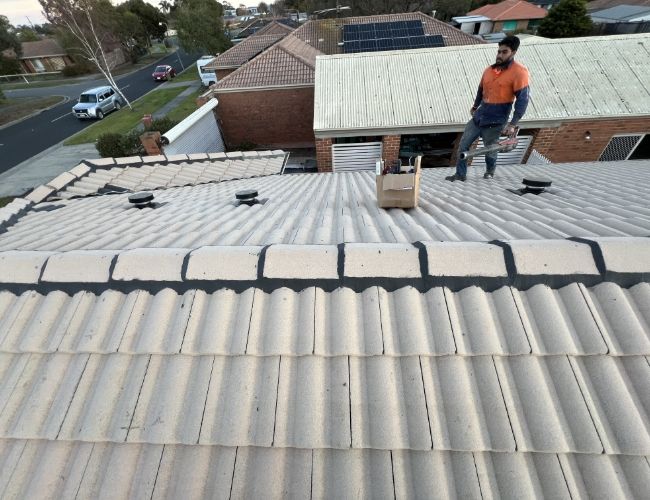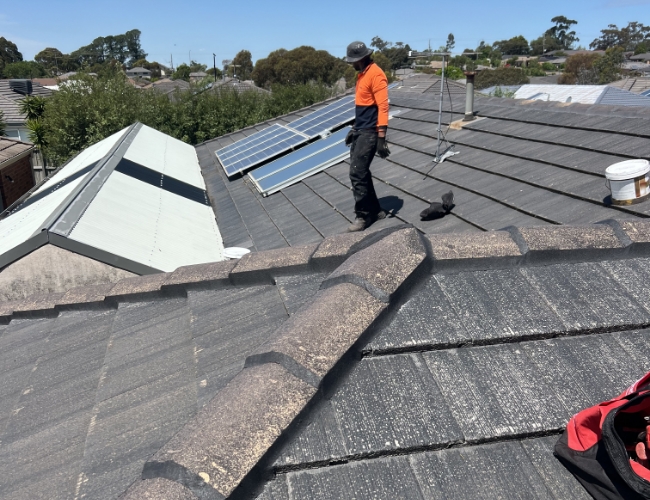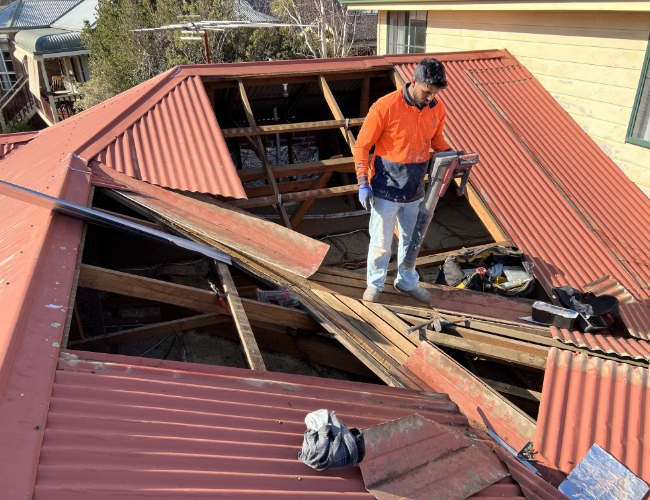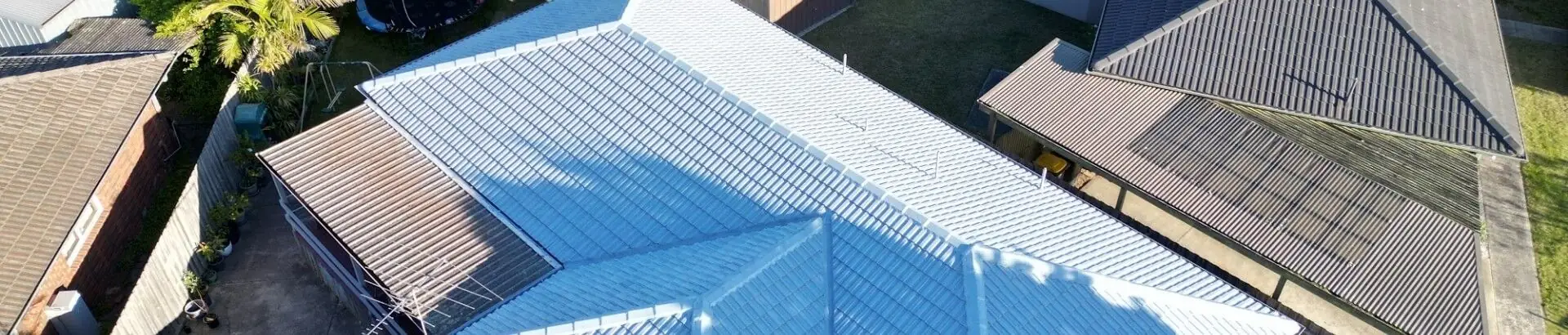

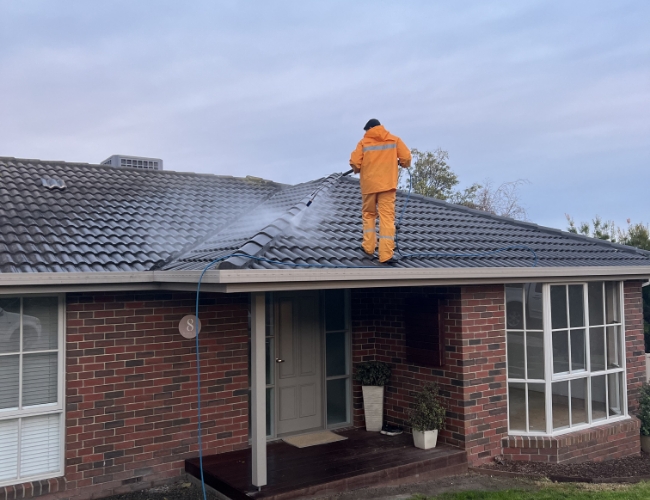
Quick answer: A roof that stays dry in light rain but leaks in heavy rain usually has a weak spot that only fails when there is a lot of water or wind. The common causes are cracked or slipped tiles, cracked bedding and pointing on the ridge capping, an ageing roof, heavy wind driving rain under the tiles, blocked gutters that overflow into the eaves, and blocked or rusted valleys. Each one has a specific fix, and most are small repairs if they're caught early.
Light rain runs off a roof without testing it. A downpour is different: there is more water than the gutters and valleys can carry, and wind pushes it sideways and upwards into gaps that stay dry the rest of the time. That's why a leak can appear in a storm and then seem to disappear for months.
The 6 most common causes
1. Cracked or slipped tiles
A cracked tile lets water through, and a tile that has slipped out of line leaves a gap. In light rain the sarking underneath may catch the water. In heavy rain, it overwhelms it.
How it's fixed: the damaged tiles are replaced and slipped tiles are re-set. See cracked or broken roof tiles: repair or replace?
2. Failed bedding and pointing
The ridge caps along the top of the roof sit on a bed of mortar, sealed with pointing. As it ages, the pointing cracks and the bedding crumbles. In heavy, wind-driven rain, water gets in along the ridges.
How it's fixed: the ridge capping is rebedded and repointed with flexible pointing. See roof rebedding and repointing.
3. Roof age
Older concrete tiles lose their surface coating and become porous, and old sarking, flashings and seals wear out. A roof that is 15 to 20 years old and has never been restored often starts leaking in heavy rain first.
How it's fixed: a roof restoration deals with the tiles, ridges and coating together, usually over 2 to 5 days. If the roof is past restoring, a tile-to-tile re-roof is the long-term fix.
4. Heavy wind
Strong wind drives rain sideways and up under the tiles, past ridge caps and around flashings. A roof can be watertight in still rain and leak in a windy storm.
How it's fixed: loose or lifted tiles are re-set, ridge caps are secured and flashings around chimneys, walls and skylights are re-sealed or replaced.
5. Blocked gutters
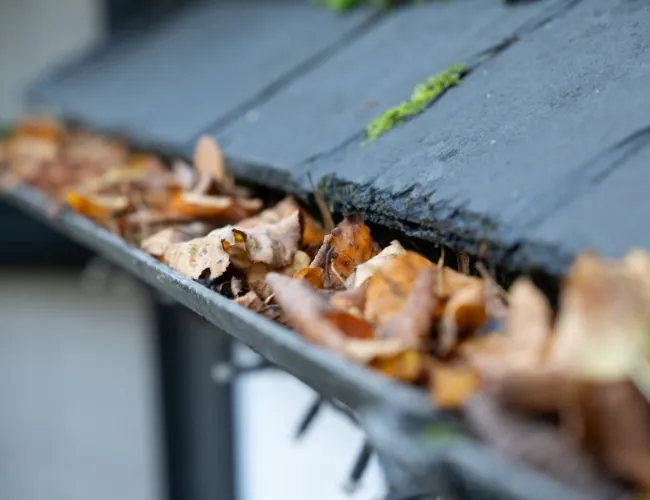
When gutters and downpipes are blocked with leaves, heavy rain can't drain away. Water backs up, overflows inside the fascia and runs into the eaves and walls. This often shows as stains along the edges of ceilings or on external walls.
How it's fixed: the gutters and downpipes are cleared and checked for sagging or rust. On homes under trees, gutter guards help. See gutter cleaning and gutter guards.
6. Valley leaks
Valleys are the metal channels where two roof slopes meet. They carry more water than any other part of the roof. Leaves build up in them, and older valley irons rust through. In heavy rain, a blocked or rusted valley overflows under the tiles.
How it's fixed: the valley is cleared, and a rusted valley iron is replaced. See roof valley leaks and valley iron replacement.
Where the leak shows vs where it starts
| Where you see the leak | Likely cause |
|---|---|
| Along the middle of the house, under the ridge | Cracked bedding and pointing on the ridge capping |
| Where two roof sections meet | A blocked or rusted valley |
| At the edges of ceilings or on external walls | Overflowing gutters |
| Near a chimney, skylight or wall | Lifted or cracked flashing |
| A single patch in the middle of a roof slope | A cracked or slipped tile |
| In several places at once | An ageing roof that needs restoring |
Water travels along battens and sarking before it drips, so the stain isn't always below the problem. Our guide on how to find a roof leak walks through tracing it.
What to do when your roof leaks in heavy rain
- Catch the water with buckets or towels and move belongings out of the way.
- Watch for a sagging ceiling. If the plaster bulges, keep people out of the room and turn off power to the lights in that area at the switchboard.
- Take photos of the stains and the weather, for the roofer and, if needed, your insurer.
- Note when it happens. Does it leak in all heavy rain, or only with wind from one direction? This helps find the cause.
- Don't go on the roof. Wet tiles are slippery, and storms are when falls happen.
- Book an inspection once the weather clears. A leak that only shows in storms won't fix itself.
Can you stop a roof leaking in heavy rain for good?
Yes, once the cause is found. Most heavy-rain leaks come from one or two specific spots: a valley, a ridge, a few tiles or a gutter. Fixing those is usually a small job. When several causes appear together, a restoration fixes them all at once.
Frequently asked questions
Why does my roof only leak when it rains hard?
Because heavy rain produces more water than gutters and valleys can carry, and wind pushes it into gaps that stay dry in light rain.
Can a leak in heavy rain damage the ceiling?
Yes. Repeated leaks stain and soften plasterboard, and can lead to mould. The sooner it's fixed, the smaller the repair.
Will painting the roof stop the leak?
No. The cause, such as a cracked tile, failed pointing or a rusted valley, has to be repaired first.
Get your leak found and fixed
Roof leaking in heavy rain? Eminent Roofing & Restoration finds and fixes leaks across Melbourne's south-east, and has completed 2,500+ roofs. We'll inspect your roof for free and give you a written quote. Every roof is priced after a free inspection. Request a quote below or call 0451 200 159.
Related services: roof leak detection, roof repairs and roof restoration.