
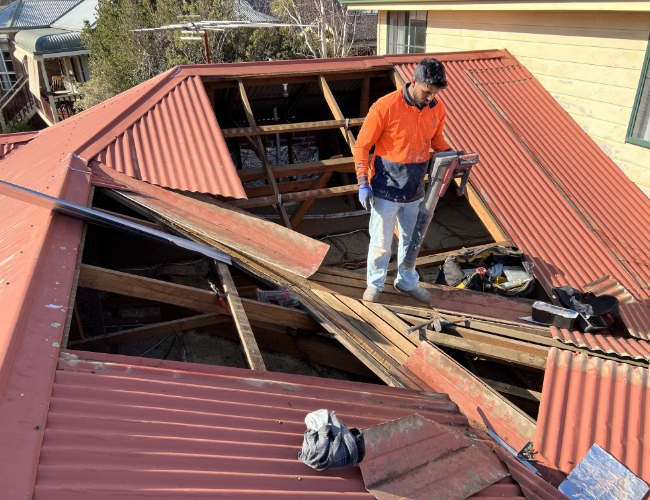
Quick answer: In Australia, home insurance usually covers roof damage caused by a storm, such as hail, strong wind or a falling tree, and the water damage that follows. It usually doesn't cover leaks caused by wear and tear, rust, old pointing or a lack of maintenance. Every policy is different, so check your product disclosure statement (PDS) or ask your insurer. After a storm, make the house safe, take photos, stop further damage and contact your insurer before major repairs.
This guide is general information, not insurance or legal advice. Your policy wording decides what's covered.
What's usually covered, and what usually isn't
| Usually covered (storm damage) | Usually not covered (wear and tear) |
|---|---|
| Tiles cracked or broken by hail | Tiles that have cracked or crumbled with age |
| Tiles, ridge caps or sheets lifted by strong wind | Ridge pointing that has cracked over years |
| Damage from a tree or branch falling in a storm | Valleys or sheets that have rusted through |
| Rain that gets in through storm damage | Leaks from gutters that were blocked by leaves for months |
| Water damage to ceilings and contents from that storm | A leak that has been getting worse for a long time |
Insurers define a "storm" in their own policy wording, so check yours. CHOICE notes that a storm claim can be refused if the damage is linked to poor maintenance, such as an unmaintained roof or gutters full of debris (CHOICE). Moneysmart's advice is to read your PDS or ask your insurer to confirm what's covered (Moneysmart).
Why maintenance matters for your claim
The line between storm damage and wear and tear often comes down to the roof's condition before the storm. If a storm lifts tiles on a well-kept roof, that's storm damage. If water comes in through pointing that has been crumbling for years, an insurer may call it wear and tear. Keeping the roof and gutters maintained, and keeping a record of the work, helps your claim. Our signs your roof needs restoration checklist covers what to watch for.
What to do after storm damage to your roof
- Make sure everyone is safe. Stay away from fallen wires and sagging ceilings, and turn off power to affected areas at the switchboard if it's safe. In an emergency, call the SES on 132 500.
- Don't go on the roof. Wet, damaged roofs are dangerous, especially during or just after a storm.
- Take photos and video of the damage outside and inside, before anything is moved or cleaned up.
- Stop further damage if you safely can. Catch water with buckets and move belongings. Your policy may expect you to take reasonable steps to limit damage.
- Contact your insurer early. Ask what they need, whether they'll send an assessor and whether you can arrange urgent repairs.
- Keep receipts and records for emergency repairs and anything you replace.
- Get the roof inspected. A roofer can confirm what was damaged and what caused it.
How a roofer helps with an insurance claim
- Finding all the damage. Storm damage is often wider than the leak you can see, such as cracked tiles across a slope after hail.
- Showing the cause. Photos of lifted tiles, hail-cracked tiles or a fallen branch help show the damage was sudden, not gradual.
- A written report and quote. A written roof condition report with photos, and an itemised repair quote, give your insurer something clear to assess. The inspection before a quote is free; a written roof condition report is a paid service.
- The repairs. Once your claim is sorted, the damage is repaired properly so the next storm doesn't find the same weak spot.
Leaks that aren't storm damage
If the leak comes from age or wear, such as old pointing, a rusted valley or porous tiles, it's usually a maintenance repair rather than an insurance claim. Fixing it early keeps the cost down. See why roofs leak in heavy rain for the common causes, and roof repairs for how we fix them.
Frequently asked questions
Does insurance cover a roof leak from old age?
Usually not. Most policies exclude wear and tear, rust and gradual damage. Check your PDS.
Should I fix the roof before the insurer sees it?
Take photos first and talk to your insurer. Limiting further damage is usually expected, but ask before major repairs.
Can I choose my own roofer for an insurance repair?
It depends on your insurer and policy. Some arrange their own repairers and some offer a cash settlement. Ask your insurer.
Do you repair storm damage?
Yes. We repair storm and weather damage to tile and metal roofs, including cracked and lifted tiles, ridge capping, valleys and flashings.
Get storm damage checked
Roof damaged in a storm? Eminent Roofing & Restoration repairs storm and weather damage across Melbourne's south-east, and has completed 2,500+ roofs. We'll inspect the damage for free and give you a written quote. Every roof is priced after a free inspection. Request a quote below or call 0451 200 159.
Related services: roof repairs, roof leak detection and roof restoration.