


Roof Restoration Endeavour Hills, VIC



Endeavour Hills was master planned from 1974 and built out estate by estate through to the 1990s. Chalcot Lodge, Gleneagles, Mossgiel Park: brick veneer under concrete tile, street after street of it. That means a roof restoration in Endeavour Hills is very often a job on a roof that is structurally fine and simply worn out on the surface, because this suburb’s tile generation reached the same point at the same time. Eminent Roofing has worked across the City of Casey since 2018, one small in-house team, no subcontractors. Call 0451 200 159 for a free inspection.

A Suburb Whose Roofs All Aged Together
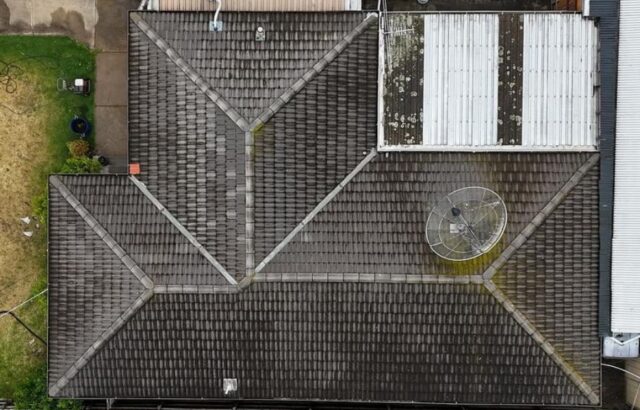
The tidy thing about a master-planned suburb is that you can predict what you will find before you get on the ladder. Concrete tile dominates, with pockets of terracotta and Colorbond on the newer infill. The tiles are usually still sound. What has gone is the surface: the factory colour chalks away, the tile turns porous and starts holding moss on the shaded faces, and the rigid ridge mortar cracks and lets water track underneath.
Water is the local variable worth naming. Eumemmerring Creek runs through the area, VICSES names Endeavour Hills among the Casey locations with flood exposure, and during the February 2024 Victorian storms the City of Casey opened the Endeavour Hills Leisure Centre as a relief centre. Nobody here needs reminding what a serious storm does. For a roof it means the valleys, flashings and ridge seal carry more of the load than they would in a sheltered suburb, and those are the parts that fail quietly on a forty-year-old tile roof. The streets around Power Reserve and Gleneagles Secondary College, and the estate blocks near the shopping centre and library, are full of roofs in that condition.

For your complete peace of mind, Eminent Roofing & Restoration is a fully licensed and insured business. We carry comprehensive public liability insurance, and our team holds all necessary Victorian qualifications and licenses.

We stand behind our work. Every job is backed by our straightforward, written guarantee on both materials and workmanship. No confusing fine print, just our commitment to a lasting, quality result.

We believe in total transparency. You'll receive a detailed, itemised quote so there are no surprises. We respect your time by arriving when we say we will, and we guarantee to leave your property clean and tidy.

We use industry-leading equipment and premium materials that meet Australian Standards. This ensures a superior, more durable finish that withstands Melbourne's harsh weather, protecting your investment for years to come.


What Happens During the Restoration
Every stage is carried out by our own crew, in order.
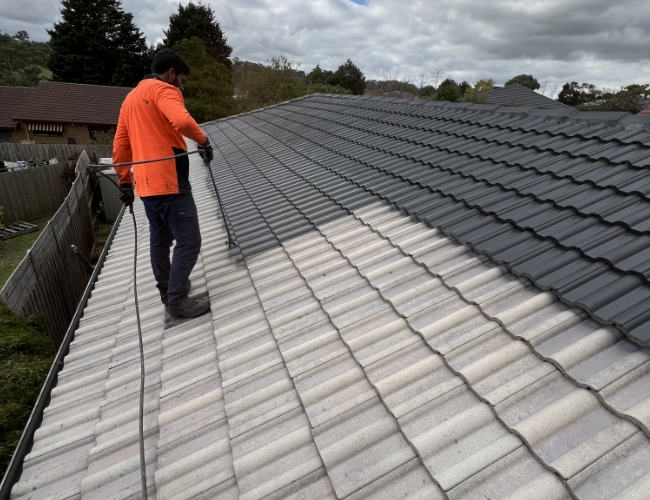
We inspect the roof and photograph it first, so what lands in your inbox is your roof rather than a template. The tiles then get a high-pressure clean, taking moss, lichen and the chalked-off coating back to a sound surface. Cracked and broken tiles are replaced with matched stock, counted at the inspection and written into the quote as a number.
Ridge caps are rebedded on fresh mortar and then flexibly repointed, so they move with the roof through summer heat rather than cracking open the way the original rigid mortar did. Gable lines get the same bedding and repointing, barge capping is refitted along the edges with any perished bargeboard replaced, and where a batten underneath has rotted or split it comes out before the tiles go back down. We also drill weep holes wherever water has been sitting with nowhere to drain, a common find on the flatter estate pitches around here.
Then the water path, which on an exposed Casey roof is the part that earns its keep. Valleys and flashings are repaired where needed, and storm seal is laid into the valleys so fast-running water sheds down the valley instead of pushing sideways under the tiles. Leak detection and sealing follows, dealing with the exact points where water has been getting in rather than trusting a coating to cover it.
On exposed pitches we fit galvanised clips to hold the tiles down, because a tile that lifts in a strong gust is where the next leak starts. Where the roof space is closed up and holding heat and damp under the tiles, whirlybird installation gives the cavity somewhere to breathe, quoted only where it will genuinely help.
The Colorbond on the newer infill blocks takes a different run of work again. Nothing gets repointed on steel, so we cut out rusted sheets, back off rusted screws that have wept rust down the pans and drive new ones home, then go over the whole roof resealing the joints and flashings before a coating is opened. On an estate roof that has already sat through a Casey storm or two, that sheet and screw work is what keeps the next one outside.
Last comes the finish: a sealer coat that soaks into the tile, then a genuine three-coat system over the top. Three coats, written as three. Gutters are cleared and the site left clean when we pack up.
Working Safely on Estate Rooflines
The estate homes here are mostly single storey with a moderate pitch, and that is precisely the roof people are most casual about. Our crew is not. Everyone works in harness, safety rails go along the edges, and scaffolding goes up wherever a double-storey build, a steeper pitch or an awkward split level calls for it. The payoff is on the roof, not just the paperwork: an anchored crew works carefully over bedding, pointing and valley detail rather than rushing across a slope watching its footing.

Comparing Roofing Quotes Before You Commit
In a suburb full of near-identical roofs you will get near-identical quotes, so the differences hide in the detail. Before you sign, check:
- Does the quote name a tile replacement count, or fall back on “as required”?
- Does it cover valleys, flashings and storm sealing, or only the clean and the coating?
- Is the pointing described as flexible, and are ridge caps rebedded or just repointed over old mortar?
- How many coats does it say, in words?
- Is the workmanship warranty in the document, with what it covers spelled out?
- Are the people who quoted the job the people who will be on your roof?
- Is there a written scope for what happens if something worse turns up after the clean?
Restore, Repair or Replace
Restoration is the right call when the structure is sound and the wear is spread across the surface, which describes most of the tile stock here. Pointing gone along the ridge lines, colour chalked off, moss holding on the southern slopes: a restoration brings that roof back.
A repair is the right call when the trouble sits in one place. One rusted valley, a slipped run of tiles, a single flashing letting water past after a storm. There is no reason to sell a whole roof to fix one section, and we will not.
Replacement is honest only when the material itself has failed: tiles crumbling across the roof, timber gone through underneath. No coating repairs that. You get the photographs and the plain read, including the cheapest option that actually solves your problem.

The 10-Year Workmanship Warranty Behind Endeavour Hills Roofs
Every restoration we complete is backed by a 10-year workmanship warranty, in writing, rather than promised at the front door. It covers the bedding and pointing, the valley, flashing and sealing work, and the three-coat painting system on top. Any failure that traces back to our workmanship during that term gets a return visit and a proper fix. Coating manufacturers back their own products separately, and we set those warranties out in the quote alongside our workmanship cover.
What Drives the Cost on a Endeavour Hills Roof
There is no figure on this page, because a roof cannot be quoted honestly from the street. The cost is driven by size and pitch, whether the roof is concrete tile, terracotta or metal, how many tiles need replacing, how much bedding and pointing has failed, the condition of the valleys and flashings, whether clips or ventilation are needed, and how safely the roof can be reached. Two houses in the same estate can land differently, because one has had its valleys cleared for decades and the other has not.
Neither the inspection nor the written, itemised quote costs you anything. If a repair will solve the problem, the quote says so rather than dressing it up as a restoration.
Who Turns Up at Your Endeavour Hills Home: Eminent Roofing & Restoration
Eminent Roofing & Restoration began in 2018 when Avi Sandhu set it up, and it remains a family-run operation. Our small in-house team of eight has completed more than 1,500 roof projects across Melbourne’s south-east, and our reviews sit at 4.9 from 82 Google reviews. There are no subcontractors, so the person who quotes your Endeavour Hills roof is one of the people who carries out the work. It is a fair part of why around 80% of our new work comes by referral and 99% of our customers return. Read the full scope on our roof restoration page, and if blocked gutters are the immediate problem we also handle gutter cleaning in Endeavour Hills. Our base sits at 15 Botham Crescent, Pakenham VIC 3810, ABN 95 670 066 207, open Monday to Saturday between 7:30am and 5:30pm.
Book a Free Endeavour Hills Roof Inspection
If your roof has faded, gone green on the shaded side, or let water in the last time the weather turned, the useful next step is having someone up there with a camera. Book a free inspection and you will get photographs, a straight recommendation and an itemised quote with no pressure to proceed. Call 0451 200 159 or enquire online.



- Roof Restoration Bayswater
- Roof Restoration Beaconsfield
- Roof Restoration Berwick
- Roof Restoration Blackburn
- Roof Restoration Box Hill
- Roof Restoration Cardinia
- Roof Restoration Carrum Downs
- Roof Restoration Clayton
- Roof Restoration Cranbourne
- Roof Restoration Croydon
- Roof Restoration Dandenong
- Roof Restoration Drouin
- Roof Restoration Endeavour Hills
- Roof Restoration Ferntree Gully
- Roof Restoration Frankston
- Roof Restoration Garfield
- Roof Restoration Glen Iris
- Roof Restoration Glen Waverley
- Roof Restoration Hallam
- Roof Restoration Harkaway
- Roof Restoration Keysborough
- Roof Restoration Knoxfield
- Roof Restoration Langwarrin
- Roof Restoration Lilydale
- Roof Restoration Malvern
- Roof Restoration Mount Evelyn
- Roof Restoration Mount Waverley
- Roof Restoration Narre Warren
- Roof Restoration Pakenham
- Roof Restoration Ringwood
- Roof Restoration Rowville
- Roof Restoration Seaford
- Roof Restoration Skye
- Roof Restoration Springvale
- Roof Restoration Wantirna
- Roof Restoration Warragul
Roof Restoration in Endeavour Hills: Common Questions
My roof leaked in a big storm. Does that mean I need a restoration?
Not necessarily. Storm leaks usually trace to a specific point: a valley, a flashing, a lifted tile. We find the source before recommending anything, and if a repair fixes it, that is what we quote.
Are the 1970s and 1980s estate roofs here worth restoring?
Generally yes. The tiles laid through Chalcot Lodge, Gleneagles and Mossgiel Park are mostly still sound. It is the coating and the pointing that have aged, and those are what a restoration renews.
What is storm sealing a valley, and do I need it?
It is a seal laid into the valley so water running hard off the roof sheds away instead of tracking sideways under the tiles. On an exposed roof it is worth doing while the crew is up there.
Can you restore a roof in stages if I want to spread the work?
Often, yes. Rebedding and repointing the ridge lines, or repairing valleys and flashings, can be standalone jobs and the coating can wait. We will tell you what should be done first.