


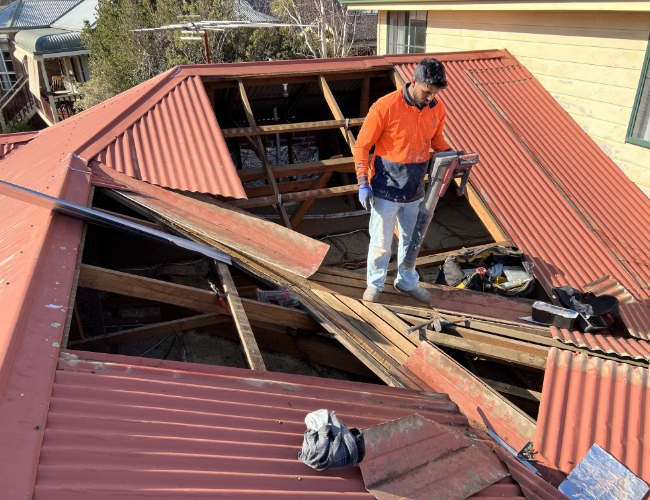
Quick answer: To find a roof leak, start inside. Note where the stain is, then check the roof space with a torch for wet timber, water trails or daylight, and trace the water uphill to its entry point. From the ground, look for cracked tiles, damaged ridge capping, lifted flashing and blocked gutters. Leave on-roof checks and repairs to a roofer.
A roof leak rarely drips directly below the hole. Water runs along battens, sarking and rafters before it shows on your ceiling, which makes leaks hard to pin down. This guide shows you how to find a roof leak safely, where Melbourne roofs leak most often, and when it is time to stop and call a professional.
Signs of a leaking roof
You may have a leak if you notice:
- Brown or yellow stains on the ceiling or high on walls
- Paint that is bubbling, peeling or sagging
- A musty smell or mould, especially in corners and wardrobes
- Dripping sounds during or after rain
- Damp or compressed insulation in the roof space
- Water marks on timber in the roof space
- Stains that grow after each heavy rain
How to find a roof leak: step by step
1. Limit the damage first. Put a bucket under the drip and move furniture and electronics. If the ceiling is bulging, keep clear of it. If water is near a light fitting or power point, turn off the power at the switchboard and call an electrician.
2. Mark where the water shows. Note the exact spot of the stain and measure its distance from two walls. This helps you find the same point in the roof space.
3. Note when it leaks. A leak that appears only in heavy, wind-driven rain often points to flashing or ridge capping. A leak in any rain points to a cracked tile, a hole or a blocked valley. Dampness without rain can be condensation or a plumbing leak.
4. Check the roof space with a torch. If you have safe access, look above the stain. Step only on the ceiling joists, never on the plasterboard. Look for wet or dark timber, water trails, damp insulation and mould.
5. Trace the water uphill. Follow the wet trail up the rafter or sarking to the highest wet point. The entry point is usually higher up the roof than the stain.
6. Look for daylight. Turn off the torch. Pinpoints of light through the roof show gaps, cracked tiles or holes. Note that tile roofs without sarking naturally show some light at the edges.
7. Inspect the outside from the ground. Walk around the house. Use binoculars or your phone camera on zoom. Look for cracked, slipped or missing tiles, missing mortar on the ridge caps, rust, lifted flashing and sagging or overflowing gutters.
8. Take photos and notes. Photograph the stain, the roof space and anything you see outside. Record the date and the weather. This speeds up the roofer’s diagnosis and helps with any insurance claim.
The most common leak points on Melbourne roofs
| Leak point | What goes wrong | Typical clue |
|---|---|---|
| Ridge capping | Bedding and pointing crack, and caps come loose | Leaks along the centre line of the house in windy rain |
| Cracked or slipped tiles | Hail, foot traffic, age or falling branches | A stain below one area of the roof |
| Valleys | Rust, or leaves blocking the valley iron | Leaks where two roof sections meet |
| Flashing | Lifts or cracks around chimneys, walls, vents and skylights | Stains near a chimney, skylight or wall junction |
| Gutters and downpipes | Blockages cause water to back up into the eaves | Stains at the edge of ceilings and along external walls |
| Metal roof fasteners | Screws loosen and rubber washers perish | Small drips in a line along a sheet |
| Rusted sheets or laps | Corrosion creates pinholes | Leaks under older metal roofs |
| Solar panel and antenna mounts | Poorly sealed penetrations or cracked tiles under brackets | Leaks that began after an installation |
Melbourne’s weather adds to the problem. Hot days followed by cold changes make roofing materials expand and contract, which cracks rigid mortar. Strong winds drive rain under tiles and flashings.
What you can safely do yourself
- Catch the water, and dry the area to prevent mould.
- Clear gutters and downpipes if you can reach them safely from a stable ladder on a single-storey home.
- Trim branches that overhang the roof.
- Document everything with photos.
What not to do
- Do not climb onto the roof. Wet tiles and metal are slippery, and old tiles can break underfoot.
- Do not rely on silicone. Sealant smeared over a crack often traps water and hides the real problem.
- Do not ignore a small leak. Water rots battens, ruins insulation and feeds mould long before the ceiling shows it.
- Do not pressure-clean or disturb an asbestos roof.
When to call a roofer
Call a professional when:
- You cannot find where the water is getting in
- The leak returns after a repair
- You can see cracked tiles, loose ridge caps or lifted flashing
- The ceiling is sagging or the stain is growing
- The roof is steep or two storeys high
- There is storm damage and you need a report for insurance
A professional leak detection starts with an inspection of the roof and the roof space. The roofer checks every common entry point, may water-test suspect areas, and gives you photos and a written quote for the repair.
How much does it cost to fix a roof leak?
In Melbourne, a minor leak repair typically costs $260 to $840. Replacing damaged tiles typically costs $315 to $1,050, and ridge capping repairs $420 to $1,250. The price depends on the cause, the height of the roof and how much needs to be repaired.
Acting early keeps the cost down. A cracked tile is a small repair. A ceiling replacement and mould treatment are not.
Frequently asked questions
How do I fix a roof leak myself? You can limit the damage from inside and clear blocked gutters safely from a ladder. Repairs on the roof itself should be done by a roofer, because walking on a roof is dangerous and temporary sealant rarely lasts.
Why does my roof only leak in heavy rain? Heavy or wind-driven rain pushes water under tiles and behind flashing, or overwhelms blocked valleys and gutters. The usual causes are failed pointing, lifted flashing or a blocked valley.
Where do most roof leaks come from? Most leaks start at joins and penetrations: ridge capping, valleys, flashing around chimneys and skylights, and cracked tiles. Large flat areas of the roof leak less often.
Is a roof leak an emergency? It is urgent if water is near electrics, the ceiling is sagging, or water is flowing in. Turn off the power to the affected area and call a roofer straight away.
Does home insurance cover roof leaks? Policies often cover sudden storm damage and exclude leaks caused by wear or lack of maintenance. Check your policy and keep dated photos.
Get a free roof inspection
Found a stain and cannot find the source? Eminent Roofing & Restoration provides roof leak detection and repairs across Melbourne’s south-east, with emergency call-outs outside working hours. We find the cause, show you what we found and give you an itemised quote. There’s no deposit: you pay 50% at the halfway point and 50% on completion, and every full restoration comes with a free gutter clean.
Book a free inspection → or call 0451 200 159.
Related services: Roof leak detection · Roof repairs · Gutter cleaning


Leave a Reply
You must be logged in to post a comment.