
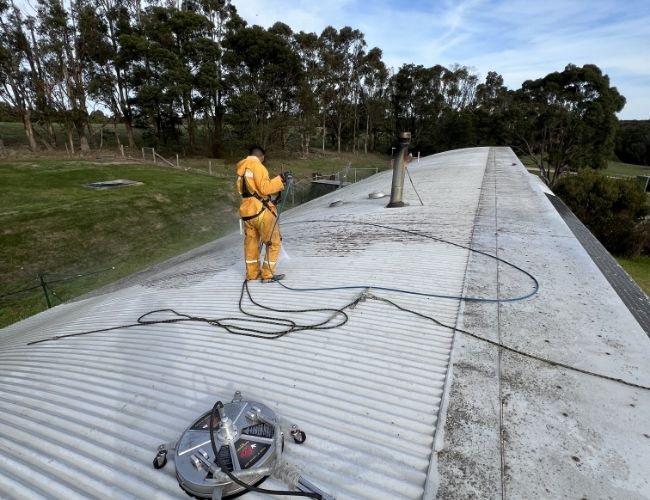
Quick answer: Yes, whirlybirds work, within limits. A whirlybird is a wind-driven vent that lets hot, damp air escape from the roof space. It helps keep the roof space cooler in summer and drier in winter, but it needs wind to spin, so it does little on still days. It isn't a replacement for insulation. The best time to add whirlybirds to a tile roof is during a roof restoration, when the roof is already being worked on and the tiles around each vent are finished with the rest of the roof.
Whirlybirds are one of the most searched roofing products in Australia, and plenty of people buy one and then wonder how to fit it. This guide explains what whirlybirds do and don't do, how many a house needs, and why fitting them on a tile roof is a job for a roofer.
What is a whirlybird?
A whirlybird, also called a roof turbine or turbine vent, is a round, finned vent that sits on the roof over a hole into the roof space. When the wind blows, the head spins and draws air up and out. Hot or damp air leaves the roof space, and cooler air comes in through the eaves and other gaps to replace it.
What whirlybirds do well
- Let hot air out in summer. A roof space can get very hot on a summer day. Venting some of that heat reduces how much soaks into the ceiling.
- Reduce moisture and condensation. In winter, warm, damp air from inside the house rises into the roof space. Ventilation helps it escape before it condenses on the underside of the roof.
- Use no power. They run on wind alone, with nothing to switch on.
- Need little maintenance. A good unit spins for years with only an occasional check.
What whirlybirds can't do
- Work without wind. On a still, hot day they barely turn. Powered and solar roof fans exist for that reason.
- Replace insulation. Insulation is what stops heat moving through the ceiling. Ventilation works alongside it.
- Cool the house like air conditioning. They lower the roof space temperature, not the room temperature directly.
- Fix a damp problem with a leak behind it. If the roof space is wet from a leak, the leak needs fixing first.
How many whirlybirds do you need?
It depends on the size of the roof space, the roof's shape and how much air can get in through the eaves. Larger roof spaces need more than one, and too few won't make much difference. Rather than guess from a rule of thumb, we look at your roof space and recommend how many, and where, at the inspection.
Buying a whirlybird? What to check
- Size. Larger heads move more air.
- Material and finish. Look for rust-resistant materials, and a colour that suits your roof.
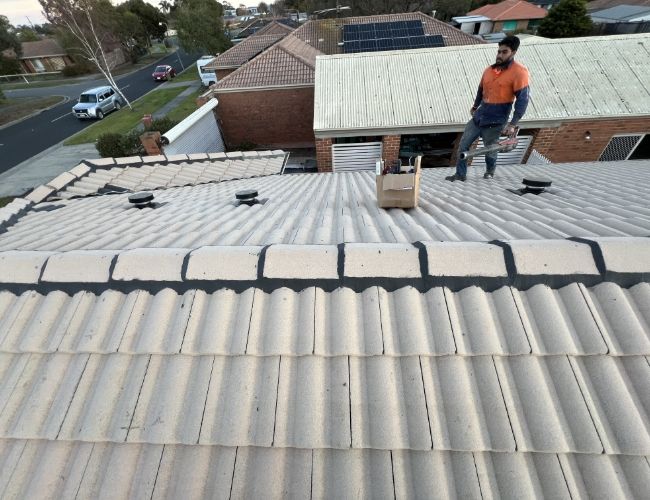
- The base. A tile roof needs a base and flashing that suit your tile profile so the vent sits flat and seals properly.
- Noise. A cheap or badly fitted unit can rattle or squeak in strong wind.
Why whirlybirds on a tile roof are a roofer's job
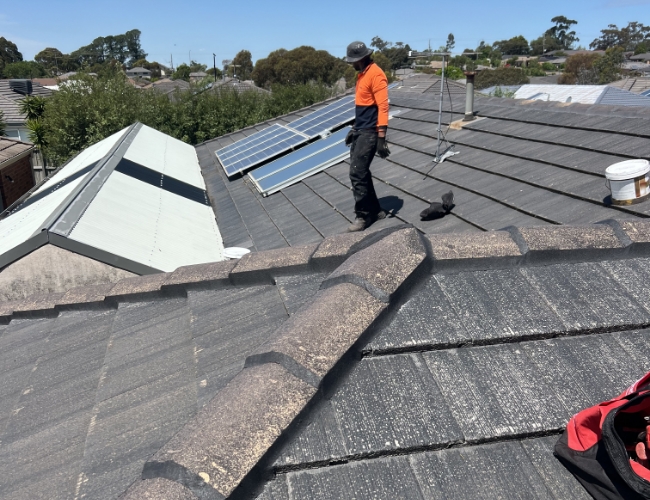
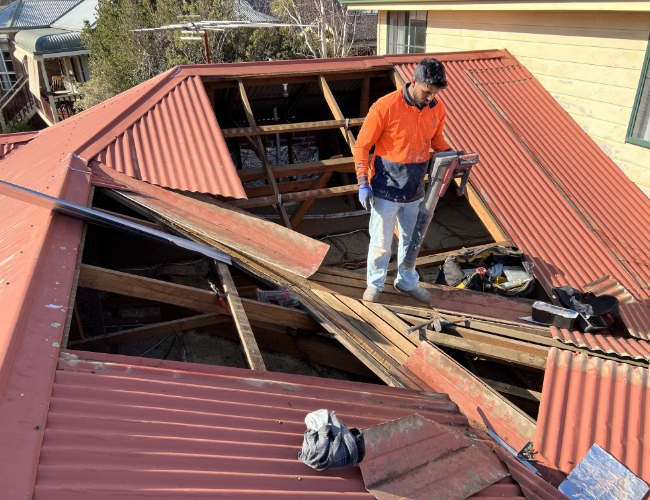
Fitting a whirlybird means cutting a hole in the roof. On a tile roof, the tiles around it are cut or removed and the base is flashed so rain can't get in. Done badly, a whirlybird becomes a leak. Working on tiles also cracks them if you don't know where to step.
Why add whirlybirds during a restoration?
A roof restoration is the ideal time to add ventilation:
- The roof is already being worked on, so there's no separate call-out.
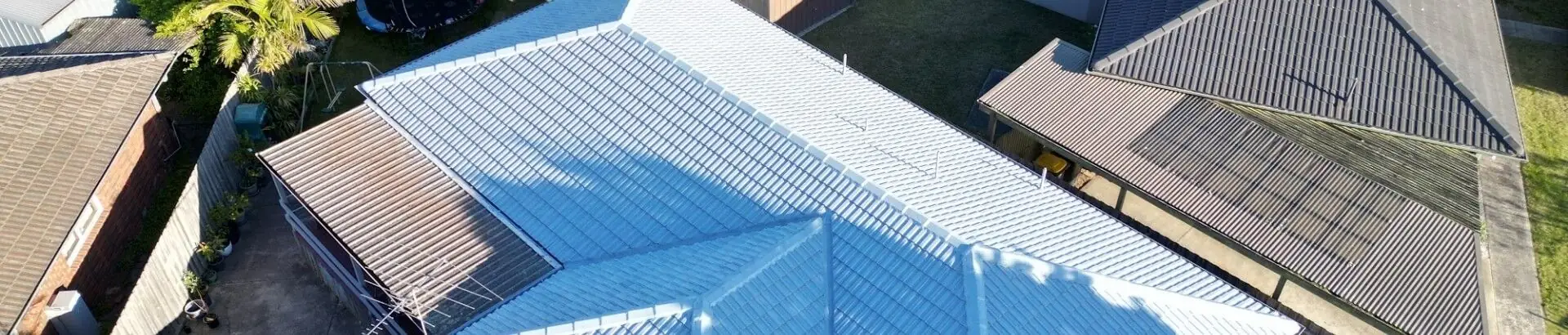
- The tiles and flashing around each vent are cleaned, sealed and coated with the rest of the roof, so the finish matches.
- Everything is checked at once. Ventilation, leaks, ridges and valleys are dealt with in the same job, which usually takes 2 to 5 days.
We supply and install whirlybirds and other roof ventilation, and the best time to add them is during a restoration.
Frequently asked questions
Do whirlybirds let rain in?
A properly fitted whirlybird with the right base and flashing doesn't let rain in. Leaks usually come from poor installation or a damaged unit.
Do whirlybirds work in winter?
Yes, as long as there's wind. In winter they help let damp air out of the roof space, which reduces condensation.
Are whirlybirds noisy?
A good unit that's fitted properly is quiet. Noise usually comes from cheap bearings or a loose fitting.
Can I install a whirlybird myself?
On a tile roof, we don't recommend it. It means cutting into the roof and sealing it properly, and working on tiles is risky.
Add ventilation to your roof
Thinking about whirlybirds? Eminent Roofing & Restoration supplies and installs whirlybirds and roof ventilation across Melbourne's south-east, and has completed 2,500+ roofs. We'll inspect your roof for free, recommend how many vents you need and give you a written quote. Every roof is priced after a free inspection. Request a quote below or call 0451 200 159.
Related services: roof restoration, roof repairs and roof painting.