
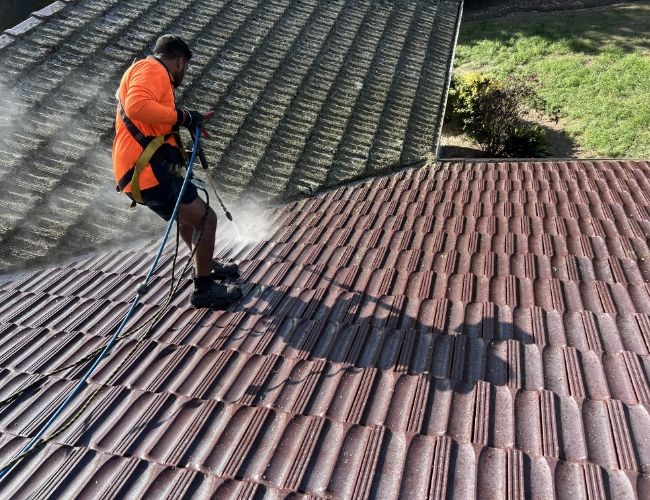
Quick answer: Moss, lichen and mould on roof tiles are a sign the tiles are holding moisture. A light film of growth on sound tiles can be cleaned off. Heavy growth on tiles that have lost their surface coating will keep coming back after a clean, because the tiles are porous. That roof needs restoring: a clean, repairs and a new sealed coating. The worst option is to leave it, because growth holds water against the tiles, blocks gutters and lifts tile edges over time.
Growth on a roof is common in Melbourne, especially on south-facing slopes and under trees. It isn't just a cosmetic problem. This guide explains how to tell moss, lichen and mould apart, what each one does to your roof, and how to decide between a clean and a full restoration.
Moss, lichen or mould: how to tell them apart
| Growth | What it looks like | Where it grows | What it does |
|---|---|---|---|
| Moss | Green, soft, spongy clumps | Shaded, damp areas; between tile laps and along ridges | Holds water like a sponge, lifts tile edges, washes into gutters |
| Lichen | Flat, crusty patches in grey-green, yellow, orange or white | Sunny or shaded tiles, often in circles | Grips the tile surface tightly and slowly breaks it down |
| Mould and algae | Black or dark green streaks and staining | Shaded slopes, under trees | Stains tiles and holds moisture on the surface |
Many roofs have all three. Lichen in particular is a sign the tile surface has been weathering for years.
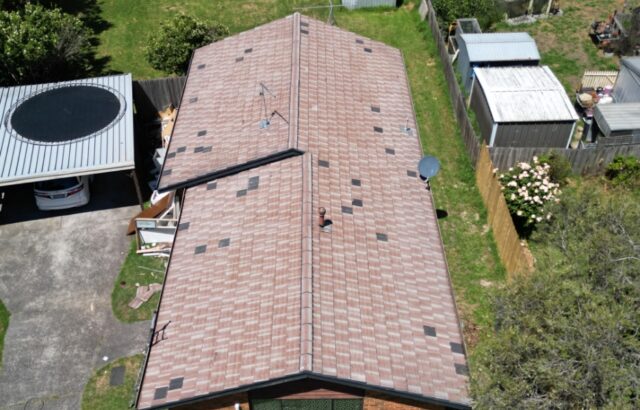
Why it grows on some roofs and not others
- Porous tiles. Concrete tiles that have lost their factory coating soak up water, which gives growth a damp place to live.
- Shade. South-facing slopes and roofs under trees dry out slowly after rain.
- Leaves and debris. Leaf litter in valleys and gutters holds moisture and feeds growth.
- Age. Older terracotta loses its surface and becomes rougher, which helps lichen grip.
The damage growth does
- Water held against the tiles. Moss stays wet for days after rain, so the tiles stay wet too.
- Lifted tile edges. Clumps of moss between tile laps push tiles up and let wind-driven rain in.
- Blocked gutters and valleys. Moss washes down in heavy rain and blocks gutters, downpipes and valleys, which can cause overflow and leaks. See why roofs leak in heavy rain.
- A weaker tile surface. Lichen slowly etches into the surface of tiles over many years.
Clean, treat or restore: which does your roof need?
| Your roof | Best option |
|---|---|
| Light growth, tiles in good condition, coating intact | A professional roof clean |
| Moderate growth, tiles sound but faded or porous | A clean followed by a sealed coating, so growth has less to hold on to |
| Heavy growth plus cracked tiles, cracked ridge pointing or leaks | A full roof restoration |
| Heavy growth on tiles that are crumbling | A tile-to-tile re-roof |
A clean on its own removes the growth but doesn't change why it grew. On porous tiles, moss and lichen come back. Sealing the tiles with a new coating is what slows it down. A restoration usually takes 2 to 5 days and starts from around $4,500.
Should you remove moss yourself?
Think carefully before you do.
- Walking on a mossy roof is dangerous. Wet moss is slippery, and tiles crack underfoot.
- Scraping damages the tiles. Wire brushes and scrapers take off the remaining surface, which makes the next growth worse.
- Pressure washing takes skill. Too much pressure, or spraying up under the tile laps, cracks tiles and forces water into the roof.
- Chemicals need care. Some products harm plants, pets, rainwater tanks and painted surfaces, so read the label and check before you use anything on the roof.
A professional clean is done from a safe position, at the right pressure and with the gutters cleared afterwards.
Keeping growth away after a clean
- Trim branches that shade the roof or drop leaves on it.
- Keep gutters and valleys clear so water drains quickly.
- Have the roof checked every couple of years, and after storms.
- On weathered concrete tiles, a sealed coating makes the biggest difference.
Frequently asked questions
Is moss on the roof bad?
Yes, over time. It holds water against the tiles, lifts tile edges and blocks gutters and valleys.
Will lichen come back after cleaning?
On porous or weathered tiles, usually yes. A sealed coating after the clean slows it down a lot.
Is roof growth a sign I need a restoration?
Heavy growth often goes with other signs, such as faded tiles and cracked pointing. Our signs your roof needs restoration checklist covers them all.
Get your roof checked
Moss or lichen on your roof? Eminent Roofing & Restoration has completed 2,500+ roofs across Melbourne's south-east. We'll inspect your roof for free and tell you honestly whether a clean is enough or whether the roof needs restoring. Every roof is priced after a free inspection. Request a quote below or call 0451 200 159.
Related services: roof cleaning, roof restoration and gutter cleaning.