
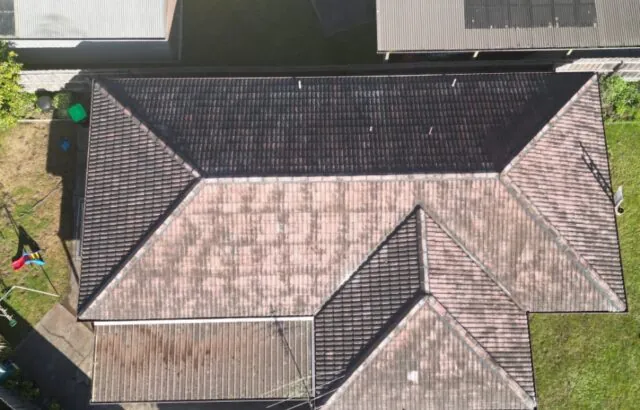
Quick answer: The main signs your roof needs restoration are faded or chalky colour, moss and lichen, cracked or broken tiles, cracked pointing, loose ridge caps, rusty valleys, tile grit in the gutters, leaks or ceiling stains, overflowing gutters, or a roof that is 15 to 20 years old and has never been recoated.
Most roofs give plenty of warning before they fail. The trouble is that few people look up. This checklist shows what to look for, what each sign means and how urgent it is. You can check most points safely from the ground.
The 10-point checklist at a glance
- Faded, chalky or patchy colour
- Moss, lichen and mould growth
- Cracked, broken or slipped tiles
- Cracked or missing pointing on the ridge caps
- Loose or shifted ridge caps
- Rust on valleys, flashings or metal sheets
- Tile grit or mortar pieces in the gutters
- Water stains or leaks inside
- Sagging, rusted or overflowing gutters
- A roof 15 to 20 years old that has never been restored
1. Faded, chalky or patchy colour
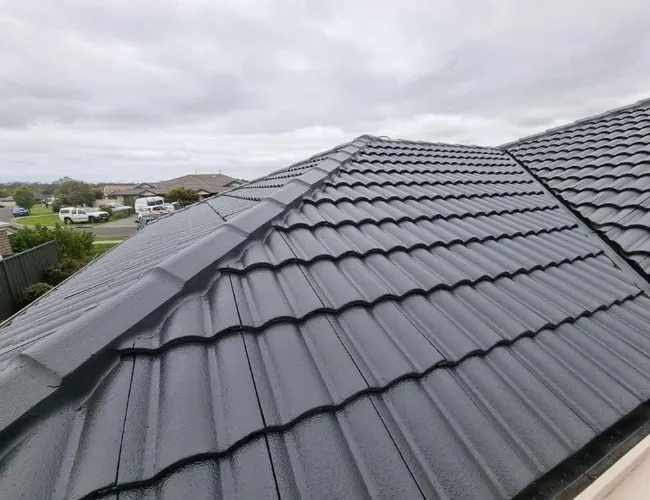
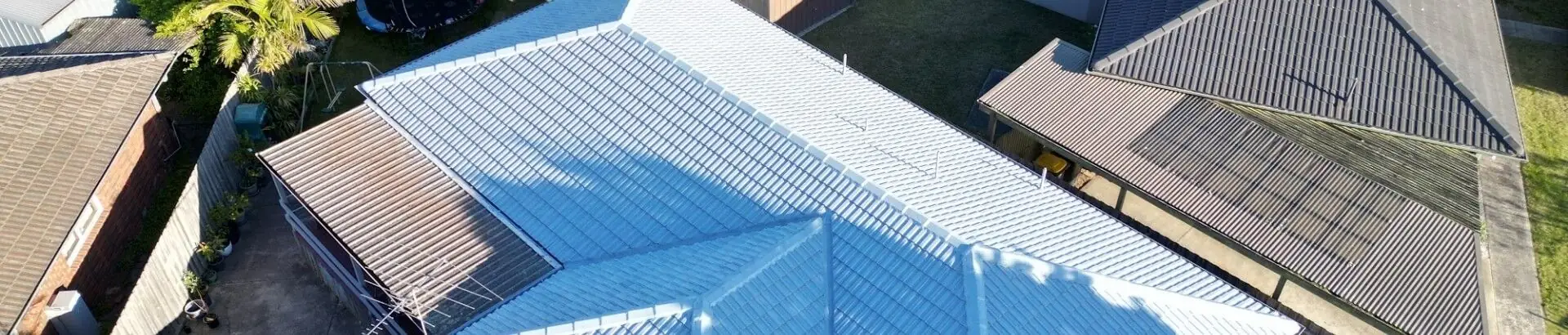
Concrete tiles leave the factory with a coloured surface coating. Years of sun wear it away, leaving the roof dull and patchy. Once the coating is gone, the tile becomes porous and soaks up water. On metal roofs, the paint turns chalky and leaves powder on your hand.
What it means: the protective layer is wearing out. This is the classic sign a roof is due for a recoat.
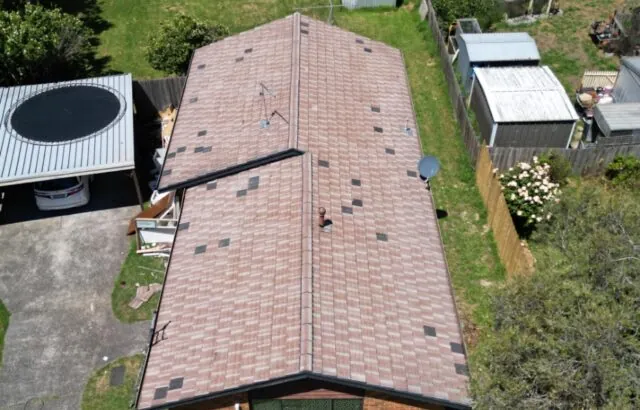
2. Moss, lichen and mould growth
Moss and lichen grow on porous, damp surfaces, especially on shaded slopes and under trees. They hold moisture against the tiles, lift tile edges and block the water channels between tiles.
What it means: the tiles are absorbing water. A pressure clean and a sealed coating remove the growth and slow its return.
3. Cracked, broken or slipped tiles
Tiles crack from hail, falling branches, foot traffic and age. A single cracked tile lets water reach the battens and sarking below.
What it means: a few broken tiles are a simple repair. Broken tiles right across the roof suggest the tiles are becoming brittle, so have it assessed.
4. Cracked or missing pointing on the ridge caps
Pointing is the sealing layer along the edges of the ridge caps. Look for cracks, gaps or sections that have fallen out.
What it means: water can get under the ridge caps, and the caps are losing their hold. They need repointing with a flexible compound. Our guide What is roof rebedding and repointing? explains the work.
5. Loose or shifted ridge caps
If the ridge line looks uneven, or caps have moved or blown off in strong wind, the mortar bedding underneath has failed.
What it means: this one is urgent. Loose ridge caps can slide off and leave the top of the roof open. They need rebedding and repointing.
6. Rust on valleys, flashings or metal sheets
Valley irons are the metal channels where two roof slopes meet. Leaves sit in them and hold moisture, so they are often the first metal to rust. On metal roofs, check around screws, laps and edges.
What it means: surface rust can be treated and coated. Rust that has eaten through needs the valley or sheet replaced.
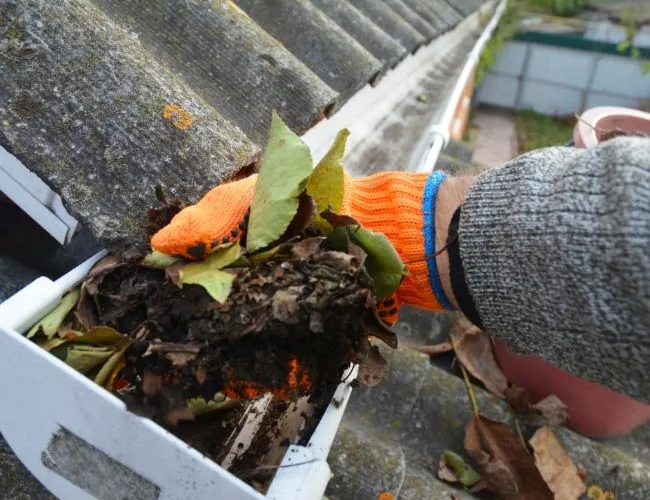
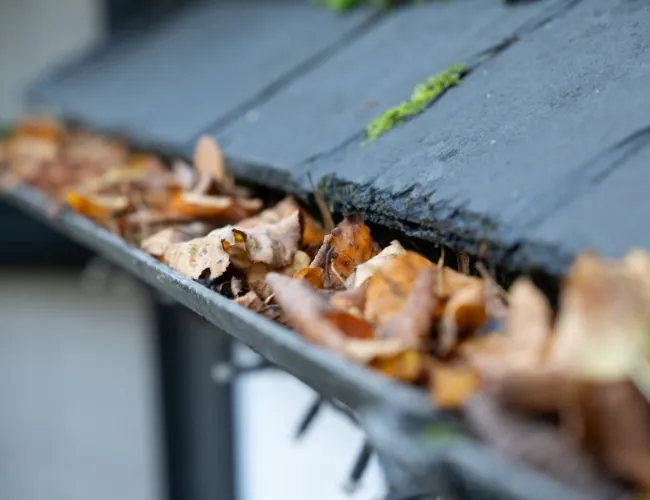
7. Tile grit or mortar pieces in the gutters
Sandy grit in the gutters comes from the surface of ageing concrete tiles. Chunks of mortar come from failing ridge capping.
What it means: the roof surface or the pointing is breaking down. We'll tell you what we find when we clean your gutters.
8. Water stains or leaks inside
Brown stains on ceilings, peeling paint, mould in corners or a musty smell all point to water getting in. Check the roof space for damp timber or insulation.
What it means: something has already failed. Have the leak found and fixed promptly; our guide How to find a roof leak shows where to start. If the roof shows other signs on this list, a full restoration often makes more sense than a string of repairs.
9. Sagging, rusted or overflowing gutters
Gutters that overflow, sag or show rust stains are not a coating problem, but they usually turn up on the same ageing roofs. Overflowing water rots fascia boards and eaves.
What it means: the gutters need cleaning, repair or replacement.
10. A roof 15 to 20 years old that has never been restored
Age alone is a sign. The factory coating on concrete tiles and the pointing on ridge caps wear out over time, even when the tiles themselves are sound.
What it means: if your roof is in this age range and has never been recoated, book an inspection. Restoring before leaks start costs far less than fixing water damage afterwards.
How many signs mean it is time to restore?
| What you found | What to do |
|---|---|
| One isolated problem, such as a cracked tile | Book a repair |
| Two or three surface signs (fading, moss, cracked pointing) | Plan a restoration in the next 6 to 12 months |
| Loose ridge caps or an active leak | Call a roofer now |
| Brittle tiles, a sagging roof line or leaks that keep coming back | Ask whether the roof needs replacing |
What happens if you ignore the signs?
A roof doesn't stay at the same stage. Porous tiles grow more moss. Cracked pointing lets ridge caps loosen. Small leaks rot battens, soak insulation and stain ceilings.
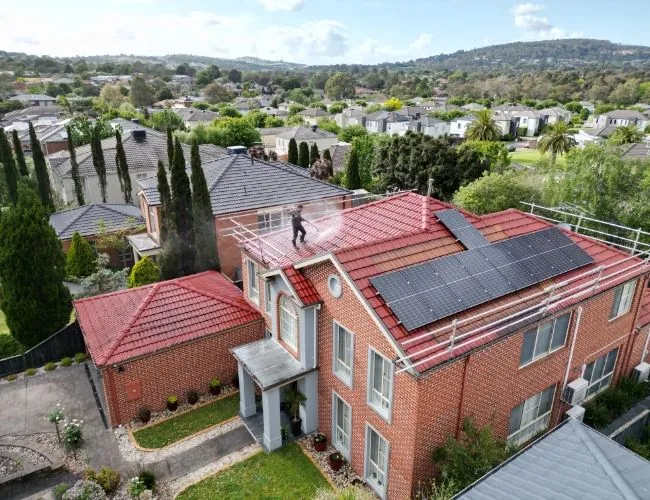
That is where the cost difference comes in. A restoration can often fix a sound roof from around $4,500. A new roof usually costs $20,000 or more. Acting while the roof can still be restored is what saves the money. Our guide How much does a new roof cost in Melbourne? explains when each one is needed.
How to check your roof safely
- Stay on the ground. Use binoculars or your phone camera on zoom.
- Look after heavy rain or strong wind, when problems are easiest to spot.
- Check the roof space with a torch, stepping only on the joists.
- Look in the gutters for grit and mortar pieces.
- Don't walk on the roof. Tiles break, and wet roofs are slippery.
Frequently asked questions
How do I know if my roof needs restoration?
Look for faded colour, moss, cracked tiles, cracked pointing and loose ridge caps. Two or more of these signs on a roof over 15 years old usually mean a restoration is due.
How often should a roof be restored?
Most tile roofs benefit from a restoration every 10 to 15 years, depending on the coating and how exposed the roof is. Have the roof inspected every few years in between.
Is moss on my roof a problem?
Yes, over time. Moss holds moisture against the tiles, lifts tile edges and blocks water channels. It also shows the tile surface has become porous.
Can I just replace the broken tiles?
Yes, if the rest of the roof is in good condition. If the coating and pointing are also worn, repairs alone won't stop the roof deteriorating.
Ticked two or more points?
Eminent Roofing & Restoration offers a free on-roof inspection across Melbourne's south-east and east, with an honest recommendation and a written, itemised quote. There is no deposit: you pay 50% at the halfway point and 50% on completion, and every full roof restoration includes free gutter and solar panel cleaning.
Related: roof restoration, roof repairs and roof restoration cost in Melbourne.